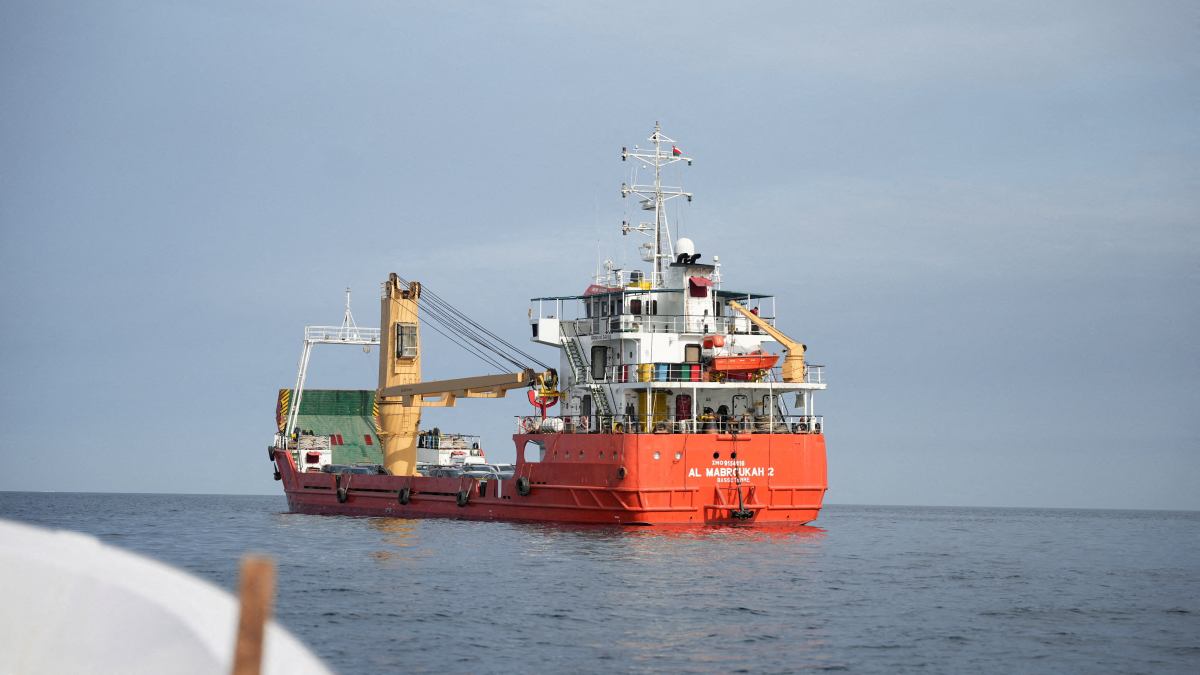
A tanker was reportedly fired upon in the Strait of Hormuz, approximately 20 nautical miles off Oman, as Iran and the US exchange threats regarding maritime control.
Incident in the Strait of Hormuz
An incident occurred in the Strait of Hormuz, roughly 20 nautical miles (approximately 37 km) north of the Omani coast, according to the United Kingdom Maritime Trade Operations (UKMTO). Two armed Iranian vessels reportedly approached the tanker and opened fire.
The tanker’s captain reported that both the vessel and its crew are safe. Reuters reported that two vessels attempting to leave the strait were targeted.
Iran Announces Closure, US Maintains Blockade
Several merchant ships in the region received radio warnings from the Iranian army on Saturday, stating that the Strait of Hormuz was closed to navigation. Iran’s Supreme Leader, Mojtaba Khamenei, declared via Telegram that the Iranian fleet was prepared to “inflict further defeats on enemies.”
Iran announced on Friday the reopening of the Strait of Hormuz to all commercial vessels for the duration of the truce in the conflict with the US and Israel, until Tuesday evening (April 21st). US President Donald Trump confirmed the opening while simultaneously announcing the continuation of a blockade of Iranian ports until a final agreement is reached.
Threats of Reclosure and Allegations of Piracy
Mohammad Bager Ghalibaf, Chairman of the Iranian Parliament, threatened that Tehran would again close the strait if the United States did not lift its naval blockade of Iran in response to Washington’s position.
On Saturday morning, the Iranian army announced a return to the “previous status” in the Strait of Hormuz, asserting “strict control” over the waterway.
Accusations of Banditry and US Patrols
The Iranian army accused the US of “notoriously breaking promises” and continuing “banditry and piracy” under the guise of the so-called blockade.
Following earlier agreements, Iran allowed a limited number of tankers and commercial vessels controlled passage through the Strait of Hormuz.
US Central Command Response
The US Central Command (CENTCOM) stated that the United States continues to enforce the previously announced “naval blockade of vessels entering Iranian ports and coastal areas or departing from them.”
The USS Canberra is patrolling the Arabian Sea as part of the blockade, with 23 vessels complying with US instructions and turning back.
Strategic Importance and Market Impact
The Strait of Hormuz is a crucial maritime route for the export of resources from the Persian Gulf region. Normally, 20% of the world’s oil and liquefied natural gas (LNG) transits this route.
Disruptions to traffic through the strait have caused increases in gas and oil prices on global markets. Brent crude oil prices rose from approximately $70 per barrel before the conflict to nearly $120 in March, falling to nearly $100 on Friday and below $90 after Iran announced the opening of the strait.
Uncertainty Amidst Peace Hopes
Hopes for peace between the US and Iran are mixed with uncertainty. Donald Trump threatened that if Tehran does not surrender its enriched uranium, the US will deprive it of its reserves “in a much less friendly way.”