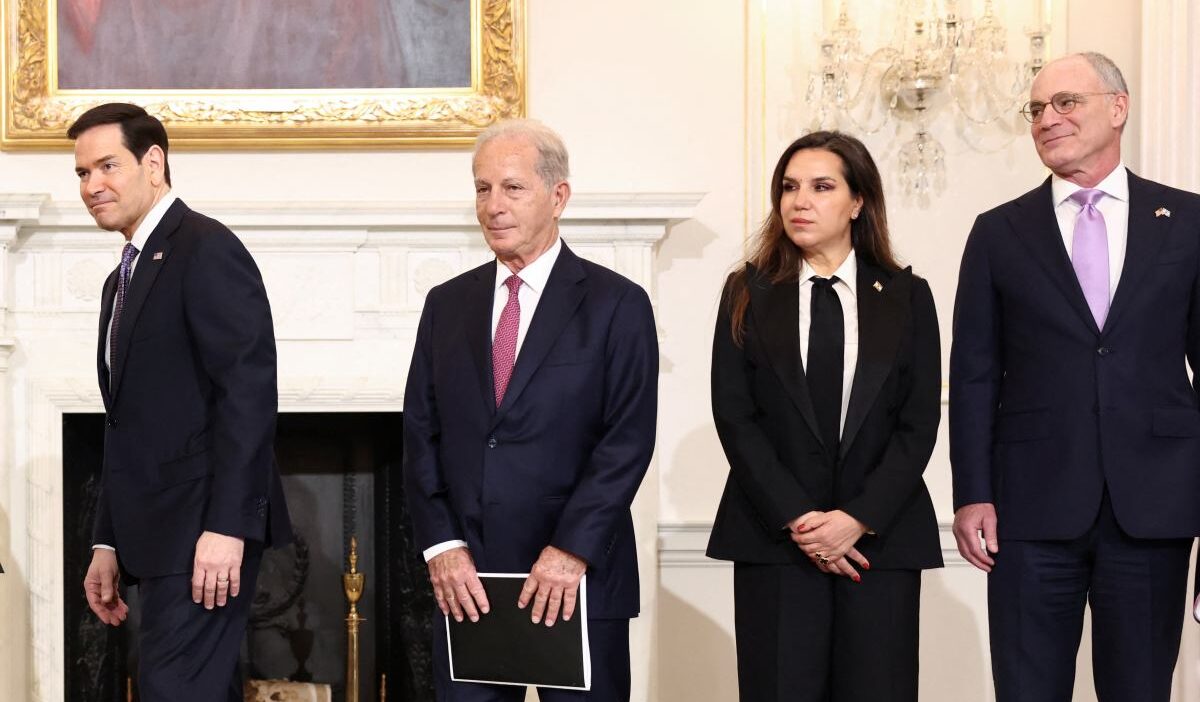
Israel and Lebanon held their first direct negotiations since 1993, facilitated by the U.S., agreeing on a shared stance against Hezbollah despite ongoing tensions.
First Talks in Decades Reveal Alignment Against Hezbollah
During the talks, a U.S. official stated that both sides “discovered they are on the same side of the equation,” viewing Hezbollah as a common threat – the most positive outcome of the discussions.
The Lebanese government reportedly defied warnings from Hezbollah’s leader against participating in the negotiations, asserting it “will no longer be occupied by Hezbollah.” Bejrut has not yet officially confirmed these reports.
Border Crossings and Disarmament of Hezbollah
The Israeli ambassador characterized the talks as “the beginning of a very strong, fierce, and consistent fight against Hezbollah,” pledging collaboration with Lebanese authorities to “eliminate the threat” posed by the pro-Iranian group.
Discussions also centered on establishing a clearly defined border between the two countries. The Israeli ambassador expressed hope that future border crossings would be limited to business travel or vacations, and voiced optimism regarding the potential for Lebanon to disarm Hezbollah, as outlined in a 2024 plan.
U.S. Seeks to Exclude France from Negotiations
The U.S. official expressed a desire to keep France distanced from the negotiations, believing their involvement is unhelpful, particularly in Lebanon.
Lebanon Calls for Ceasefire and Border Respect
The U.S. Department of State expressed hope for a comprehensive peace agreement, reaffirming Israel’s right to self-defense against Hezbollah, while emphasizing that any ceasefire must be achieved through bilateral negotiations mediated by the U.S.
Lebanon’s ambassador called for the “full implementation” of a ceasefire with Israel, respect for Lebanese sovereignty, and humanitarian aid.
Ongoing Conflict and Humanitarian Crisis
The negotiations occur amidst heightened tensions in the Middle East, including ongoing Israeli strikes in Lebanon and the displacement of 1.2 million Lebanese citizens due to the conflict. Over 2,000 Lebanese have been killed, including 165 children and 87 healthcare workers.
Hezbollah’s involvement in the conflict, launching attacks on northern Israel, has prompted a strong Israeli response. Israel maintains it is targeting Hezbollah, not the Lebanese state.
Liban as Obstacle to Broader Peace Deal
While the U.S. and Israel maintain this conflict is separate from broader regional negotiations, Iran and its mediator Pakistan seek to include it in a wider ceasefire. Lebanon’s situation complicates efforts to achieve a lasting ceasefire between the U.S., Israel, and Iran.
The Western-aligned Lebanese government has pledged to disarm Hezbollah, but faces challenges in enforcing this decision, as the organization has established a quasi-state within southern Lebanon.