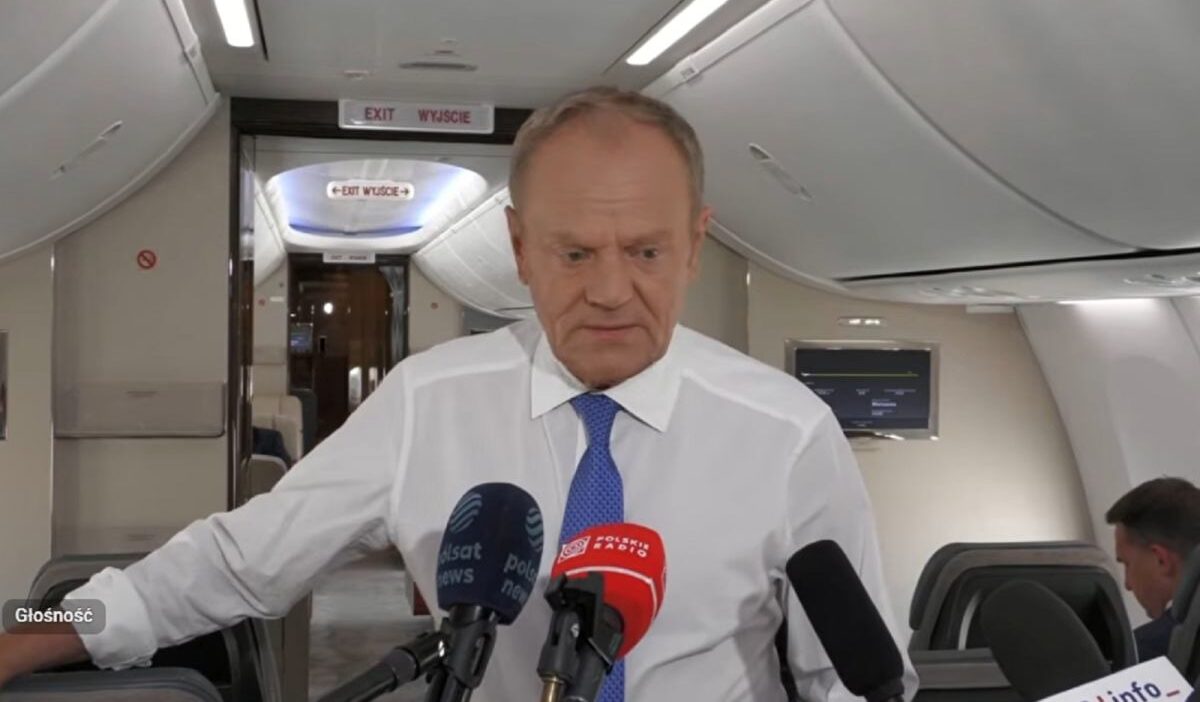
Polish Prime Minister Donald Tusk reported unusually candid discussions with Ukrainian President Zelenskyy at a recent EU summit in Cyprus, attributing the shift to the absence of Hungary’s Viktor Orbán.
Cyprus Summit and Ukraine Discussions
Prime Minister Donald Tusk participated in an informal European Council meeting in Nicosia, Cyprus, on Thursday and Friday. He discussed a meeting of European leaders with Ukrainian President Volodymyr Zelenskyy with journalists.
“The conversation with him, the discussion about Russia and Ukraine was unusually frank. Everyone noted that this conversation may have been so serious and so honest because there was a slightly different group of people present,” Tusk stated.
Orbán’s Absence and Increased Trust
Tusk explained that the change in Hungary, following the defeat of Viktor Orbán’s Fidesz party, led to a significant increase in trust among leaders. He believes this fostered a more open dialogue regarding the Russia-Ukraine war.
“Everyone spoke more honestly,” he added.
Hungarian Diplomacy and Russian Interests
Prior to the elections, published conversations between Hungarian Foreign Minister Péter Szijjártó and Russian Foreign Minister Sergey Lavrov revealed discussions about removing Russian citizens from EU sanctions lists and coordinating opposition to EU sanctions against Russia. Szijjártó denied these allegations.
SAFE Program and KPO Funds
The Prime Minister also mentioned discussions regarding the SAFE program and certain elements of the Recovery and Resilience Plan (KPO). He emphasized the importance of utilizing available funds, particularly grants, effectively.
Tusk expressed confidence in securing full utilization of the funds, noting understanding regarding specific Polish circumstances, referencing President Karol Nawrocki’s vetoes which he said “greatly hinders the implementation of some reforms.”
EU Aid Package for Ukraine and New Sanctions
EU member states unanimously approved a €90 billion loan to Ukraine and the 20th package of sanctions against Russia. Both decisions had previously been blocked by Hungary, which had conditioned its approval on the restoration of Russian oil transit through the damaged Druzhba pipeline.
Slovakia’s Shift and Pipeline Restart
Slovakia had also initially opposed the sanctions. However, the situation changed after Viktor Orbán’s electoral defeat in Hungary, with his successor, Peter Magyar, pledging cooperation with the EU. The resumption of operations in the Druzhba pipeline on Wednesday likely also influenced Hungary’s decision.
Financial Assistance Details
The European Commission will soon be able to disburse the first tranche of the €90 billion loan to Ukraine, allocated for 2026 and 2027. €30 billion will be dedicated to budgetary support, while €60 billion will strengthen Ukraine’s defense capabilities and procure military equipment from Ukrainian, EU, and European Economic Area producers.
Impact of Sanctions Package
The agreed-upon 20th package of sanctions against Russia will further target its shadow fleet and lay the groundwork for a complete ban on the transport of Russian oil by sea.